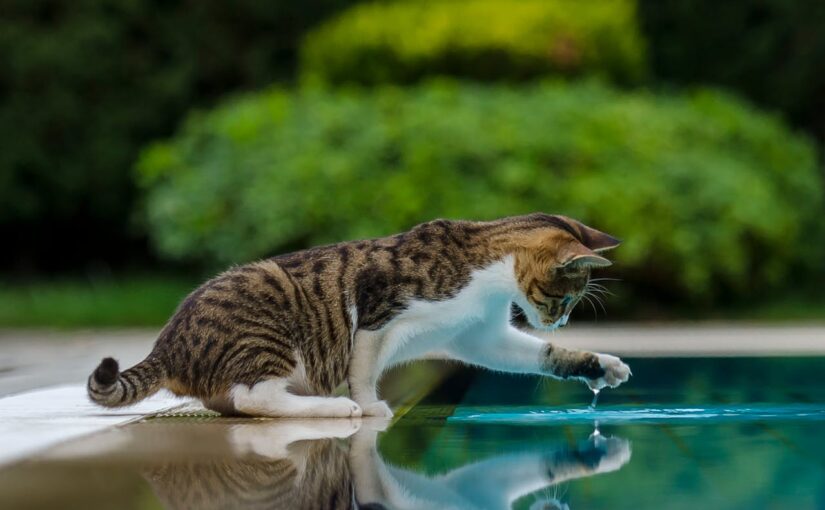
f you’ve ever tried to give your cat a bath, you already know the drill. The wide eyes. The desperate scramble. The claws gripping anything within reach. It’s a scene that plays out in countless households, leaving cat owners drenched and bewildered while their furry friend sulks in the corner, shooting betrayed glances across the room.
But why do cats hate water so much? It turns out there are some fascinating reasons behind this infamous feline quirk, and understanding them might just help you see bath time from your cat’s perspective.
Their Fur Wasn’t Designed for Soaking
Unlike dogs or other animals that take to water naturally, cats have coats that simply weren’t built for getting wet. A cat’s fur is made up of multiple layers that trap air close to the skin, providing insulation and helping regulate body temperature. When that fur gets soaked, it becomes heavy, waterlogged, and loses its insulating properties entirely.
Imagine wearing a thick wool sweater that suddenly weighs three times as much and clings coldly to your skin. That’s essentially what a wet cat experiences. Their coats take a surprisingly long time to dry, leaving them feeling chilled, weighed down, and exposed. For an animal that prides itself on agility and readiness, this vulnerable state is deeply unsettling.
Instinct from Their Wild Ancestors
To understand your cat’s water aversion, it helps to look back thousands of years. Domestic cats descend from the African wildcat, a desert-dwelling species that roamed arid regions of the Near East. These ancestors rarely encountered bodies of water and certainly had no need to swim or hunt in rivers.
Swimming simply never became part of the feline survival toolkit. While some wild cats like tigers and jaguars adapted to watery environments and became strong swimmers, the lineage that led to your couch companion took a different evolutionary path. That instinctive wariness of water has been passed down through countless generations, lingering in your cat’s DNA even if the nearest body of water is just your bathroom sink.
They Hate Losing Control
Cats are control enthusiasts. They like to know exactly where they are, what’s around them, and how to escape if needed. Water disrupts all of this in the most unsettling ways.
Wet surfaces become slippery, making it hard for cats to maintain their legendary sure-footedness. Their balance feels off, their movements become unpredictable, and suddenly the world feels unstable. Even worse, water dampens their sense of smell, which cats rely on heavily to read their environment. When a cat can’t smell properly, they lose a crucial source of information about what’s happening around them.
For an animal that thrives on precision and awareness, this sensory disruption feels like being blindfolded in an unfamiliar room. No wonder they want out immediately.
Most Cats Don’t Like Sudden Temperature Changes
Cats are creatures of comfort who prefer warm, stable environments. A sudden splash of cold water is genuinely shocking to their system, triggering an immediate flight response.
Even lukewarm water can feel jarring if a cat isn’t expecting it. Their bodies are finely tuned to maintain a steady internal temperature, and anything that threatens that equilibrium registers as a potential danger. This is why cats often tolerate a gentle drip from a faucet but panic when submerged. It’s not just the water itself but the rapid, uncontrolled change in sensation that sends them scrambling.
Bath Equals Unfamiliar Scent
Here’s something many cat owners don’t consider: cats spend a significant portion of their day grooming themselves, and a big part of that ritual involves distributing their natural scent across their fur. This scent is their identity card, their comfort blanket, and their way of marking themselves as “theirs.”
When you bathe a cat with soap and water, you strip away that carefully cultivated scent. Suddenly, they don’t smell like themselves anymore. They smell like lavender shampoo or whatever product you used, and to a cat, that’s deeply disorienting. They’ll often spend hours after a bath frantically grooming themselves, trying to restore their familiar smell and feel like themselves again.
The Good News: Baths Are Rarely Necessary
Here’s a comforting thought for both you and your cat: most healthy cats never need a bath at all. Cats are meticulous self-groomers, spending up to 50 percent of their waking hours cleaning themselves. Their rough, barbed tongues act like tiny brushes, removing dirt, loose fur, and debris while distributing natural oils that keep their coats shiny and healthy.
If your cat does get into something sticky, dusty, or smelly, you usually don’t need to resort to full immersion. Instead, try gently wiping the affected area with a slightly damp, soft cloth. Cat-safe grooming wipes are another excellent option for spot cleaning without the drama. Your cat will appreciate the gentler approach, and you’ll keep your arms scratch-free.
But Not All Cats Hate Water
Before you assume every cat is destined to flee from the faucet, it’s worth noting that some breeds actually enjoy water. The Turkish Van, affectionately nicknamed “the swimming cat,” is famous for its love of splashing around. Maine Coons often show curiosity about water, happily dipping their paws into bowls or investigating dripping taps. Bengals, with their wild ancestry closer to the surface, frequently display a playful fascination with water as well.
These breeds may have retained or developed traits that make water less threatening and more intriguing. So if you’ve got a water-loving cat on your hands, consider yourself lucky, and maybe invest in a splash mat for your bathroom floor.
Respecting Your Cat’s Preferences
At the end of the day, your cat’s dislike of water isn’t stubbornness or drama. It’s a combination of biology, instinct, and sensory experience that makes getting wet genuinely unpleasant for them. Understanding this can help you approach grooming and cleaning with more empathy and creativity.
So the next time your cat gives you that horrified look when you turn on the faucet, remember: they’re not being difficult. They’re just being a cat. And honestly, with all the joy and companionship they bring into our lives, the least we can do is keep bath time to an absolute minimum and stick to dry cuddles instead.
Image: Tarkan Kızartıcı.