Every cat parent has experienced that moment when their purring companion suddenly transforms from a contented cuddle buddy into a bundle of claws and teeth. Or perhaps you’ve watched your kitten grow from a fearless explorer into an adult cat who hides whenever the doorbell rings. These behaviors aren’t random quirks or signs of a difficult personality. They’re deeply rooted in your cat’s early experiences and natural instincts, shaped by critical developmental windows that occur long before most of us bring our feline friends home.
Understanding the forces that shape feline behavior can transform your relationship with your cat. It helps explain why some cats melt into your arms while others prefer admiring you from across the room, why a gentle stroke can sometimes end in a nip, and how to recognize when your cat is truly enjoying your attention versus merely tolerating it. This knowledge isn’t just academically interesting. It’s practical wisdom that can prevent misunderstandings, reduce stress for both you and your cat, and deepen the bond you share with your whiskered companion.
The Critical Socialization Window
Between two and eight weeks of age, kittens experience what behavioral experts call the socialization period. This brief window represents one of the most important phases in a cat’s entire life. During these precious weeks, kittens are neurologically primed to absorb information about their world, forming lasting impressions that will influence their behavior for years to come. They’re learning what’s safe and what’s threatening, who can be trusted and who should be avoided, which sounds are normal background noise and which signal danger.
The mother cat serves as the primary teacher during this period. Kittens watch her closely, observing how she interacts with humans, responds to household sounds, and reacts to other animals. If the mother cat has positive relationships with people, her kittens will typically follow her lead, approaching humans with curiosity rather than fear. She’s essentially providing them with a template for social behavior, and kittens are remarkably attentive students.
However, kittens who aren’t exposed to gentle human handling before six weeks of age face an uphill battle. The socialization window begins closing around eight weeks, and after this point, teaching a cat to trust and enjoy human company becomes a lengthy, sometimes frustrating process. Some cats who miss this critical period never become comfortable with physical affection, remaining perpetually wary of human touch. They might tolerate living with people but never truly relax into the lap cat role that many of us envision when we bring a feline into our homes.
Isolation during the socialization period creates particularly challenging behavioral patterns. Kittens raised without adequate social exposure often develop into fearful, skittish adults. They hide when visitors arrive, panic around other pets, struggle to adapt to new environments, and may respond to veterinary visits with fear-based aggression. These aren’t character flaws or signs of stubbornness. They’re the natural consequences of missing those early opportunities to learn that the world, while sometimes unpredictable, isn’t fundamentally threatening.
The lesson here is powerful: every gentle interaction with a young kitten matters. Each careful stroke, each positive encounter with a new person, each calm introduction to household sounds contributes to building a confident, well-adjusted adult cat. This is why responsible breeders and foster caregivers prioritize socialization, ensuring that kittens receive plenty of positive human contact during those critical early weeks.
When Affection Turns to Aggression
Aggression ranks among the most common behavioral concerns reported by cat owners, yet it’s often misunderstood or downplayed. Because cats are smaller than dogs and don’t typically chase people down to bite them, their aggressive displays sometimes receive less serious attention than they deserve. This attitude overlooks an important reality: an aggressive cat can be genuinely dangerous. Cats come equipped with five potential weapons, their teeth and all four paws tipped with sharp claws, while dogs primarily have their mouths to defend themselves.
Multiple factors contribute to feline aggression. Upbringing plays a crucial role, as does nutrition, overall health status, and environmental conditions. Unneutered males tend toward higher aggression levels, as do nervous cats, those who received inadequate early training, or cats who missed proper socialization. Understanding that aggression often stems from these underlying causes rather than inherent meanness helps us approach the problem with empathy rather than frustration.
Some aggressive behaviors qualify as completely normal responses to specific situations. When a cat feels threatened and cannot escape, aggression becomes a logical defensive strategy. Predatory aggression directed toward rodents and birds aligns with natural feline hunting instincts. The problem arises when cats redirect these normal aggressive impulses toward their human companions, a behavior that requires careful management and sometimes professional intervention.
The Mystery of Petting-Induced Aggression
Perhaps the most baffling form of feline aggression occurs during what should be a pleasant interaction. You’re peacefully stroking your cat, both of you seemingly content, when suddenly and without obvious provocation, your cat attacks. This phenomenon, known as petting-induced aggression, leaves many cat owners confused and hurt, wondering what they did wrong.
The precise trigger for this behavior remains somewhat mysterious, but researchers believe it relates to the duration of grooming sessions the cat received from its mother during kittenhood. Each individual cat seems to have an internal timer, a threshold beyond which physical contact becomes overwhelming rather than pleasant. The fascinating aspect of petting-induced aggression is its consistency. For any given cat, the time from first touch to attack remains relatively constant across episodes.
The good news is that cats almost always provide warning signals before launching an attack. These signs give attentive owners time to stop petting before the situation escalates. Watch for a tail that begins flicking or lashing, ears that flatten against the head, whiskers that pull backward, or a slight arching of the back. These subtle movements represent your cat’s way of saying they’ve reached their limit. Your cat believes it has clearly communicated its desire to end the interaction, but many humans miss these feline signals entirely.
When you notice these warning signs, immediately stop petting and give your cat space. The ultimate signal that your cat wants to be left alone is, of course, the bite itself. Depending on the cat’s level of irritation, this bite might range from a gentle nip to a more forceful chomp. If you consistently stop petting before the warning signs appear and offer a treat as a reward for your cat’s restraint, you may gradually extend the duration your cat tolerates being touched. However, some cats simply have lower thresholds for physical affection and never learn to enjoy extended petting sessions.
Reading Your Cat’s Preferences
Cats operate according to their own schedules and priorities. When they want attention, they make their desires abundantly clear. They’ll leap onto your lap, block your view of the screen, headbutt your hand, or unleash a storm of meows. These demanding behaviors aren’t rudeness. They’re simply your cat’s way of saying the time for affection has arrived according to their internal clock.
Most cats have strong preferences about where they enjoy being touched. The belly, despite its soft appeal to human hands, typically ranks as forbidden territory. This sensitive area houses many vital organs, making it the cat’s most vulnerable spot. When a cat rolls onto its back and exposes its belly in a familiar environment like home, this posture often signals relaxation and a sense of safety. It doesn’t constitute an invitation for belly rubs. Don’t take it personally when your cat scratches or bites in response to stomach petting. Physical punishment in these situations only escalates aggression and damages trust.
Cats also roll onto their backs as a defensive maneuver when they feel cornered and unable to escape. Unlike dogs, who display complete submission by rolling over, a cat in this position becomes a formidable opponent. They can deploy powerful thigh muscles and rear claws to target an attacker’s belly with devastating effectiveness, capable of inflicting serious wounds.
Since cats cannot lick their own heads and find it difficult to scratch there, they particularly appreciate attention in these areas. When you stroke a cat’s forehead, you’re recreating the comforting sensation of maternal grooming from kittenhood. Most friendly cats prefer petting around the base of their ears, along their cheeks, and under their chins. However, individual preferences vary considerably, so careful observation of your specific cat’s reactions is essential. Some cats purr to express pleasure, others might nudge you with a paw requesting continued attention, while some become visibly excited when you scratch near the base of their tail.
Interestingly, some cats drool when they’re particularly relaxed and enjoying being petted, a behavior more commonly associated with dogs. While cats can drool from fear or upset, contentment-induced drooling represents the feline equivalent of a blissful sigh.
The Complexities of Handling
Even when a cat meows and rubs against you affectionately, this doesn’t automatically mean they consent to all forms of handling. While some cats don’t mind being picked up, most find the experience stressful. A tolerant cat isn’t necessarily a happy cat. Cats rarely enjoy being lifted, so reserve picking up your cat for necessary situations unless you’re certain they genuinely enjoy it.
One subtle sign of feline discomfort is a quick tongue flick across the lips. This gesture indicates your cat is becoming uneasy while simultaneously feeling fascinated or confused by something. It’s the feline equivalent of a human scratching their head in bewilderment or mild irritation. If your cat begins squirming while being held, let them down immediately. Don’t force the interaction unless health concerns require it. A cat who knows they can leave whenever they choose is more likely to eventually accept and even enjoy being held.
Aggression Between Household Cats
In multi-cat households, aggression between feline residents typically stems from dominance conflicts or misdirected territorial behavior. The response to an aggressive act determines whether the behavior repeats. If one cat bumps another and receives a swift reprimand, they’ll likely think twice before trying again. Cats can become bullies, and when one household member behaves like a victim, others may begin picking on them. With patience and behavioral modification techniques, these dynamics can usually be corrected, though professional veterinary guidance should be sought promptly rather than waiting for the situation to worsen.
Fear represents one of the most common triggers for aggression. Cats are control enthusiasts, and situations that strip away their sense of control, such as veterinary visits, can trigger dramatic behavioral changes. The same cat who snuggles peacefully at home might transform into a hissing, spitting wild animal at the clinic. This isn’t inconsistency or deception. It’s a fear response to feeling trapped and vulnerable.
Feral cats display extreme territoriality regarding resources like food, water, and shelter. In rural or wild settings, cat fights remain rare because abundant space reduces resource competition. However, in crowded urban and suburban environments where territories shrink and overlap, conflicts become more frequent, particularly between rival males.
Aggression can also signal underlying health problems, so any uncharacteristic behavioral changes warrant a veterinary examination. Pain, illness, or neurological issues can all manifest as increased irritability or aggressive outbursts.
Play Fighting Versus Real Conflict
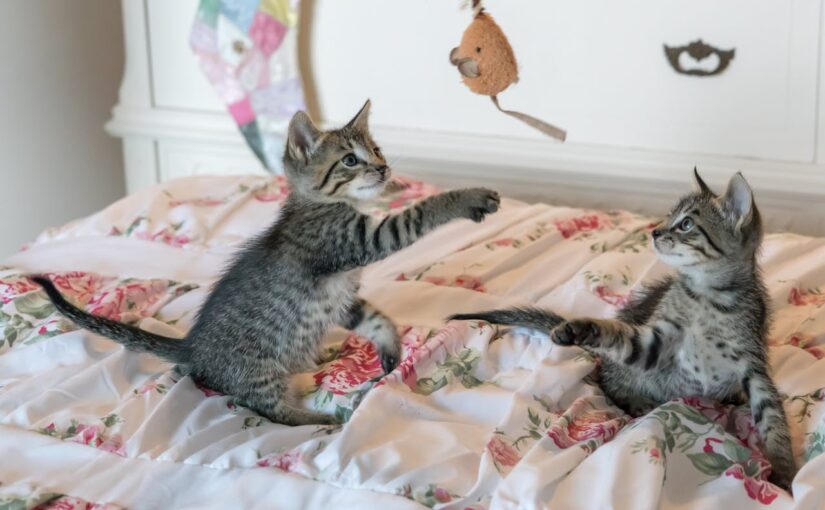
Young cats and kittens often engage in rough play that can look alarming to uninformed observers. When movements are reciprocal, roles frequently switch, neither cat hisses or shows teeth, and biting remains controlled, you’re likely witnessing healthy play behavior. Play fighting forms a crucial part of feline social development and shouldn’t be discouraged. Through these interactions, young cats learn bite inhibition and how to retract their claws when swatting.
However, if one cat appears cornered or tries fleeing, if claws remain extended, if fur and tails puff up, or if you hear hissing or growling, the interaction has crossed from play into genuine conflict requiring intervention.
Signs of serious aggression include fixed staring with narrowed pupils, ears flattened against the head, hissing, yowling, spitting, scratching, and biting. A threatened cat arches its back to appear larger, and its fur stands on end creating a puffed appearance. These unmistakable signals warn others to maintain distance.
One commonly cited aggression indicator proves surprisingly unreliable: tail lashing can accompany various emotional states, making it difficult to interpret without additional context.
Respecting Feline Sensitivities
Cats intensely dislike having air blown in their faces, apparently associating this sensation with hissing, their own signal that serious danger lurks nearby. When a cat hisses, the characteristic sound comes accompanied by a palpable puff of air. Blowing on your cat mimics this threatening gesture, triggering a corresponding defensive response.
It may surprise you to learn that cats don’t experience guilt or spite. Cats who misbehave might recognize your displeasure with certain actions, but something about those behaviors rewards them sufficiently to outweigh your disapproval. They don’t feel guilty the way humans do. If you yell at your cat and they slink away, that’s not guilt driving their retreat. They simply prefer avoiding your company when you’re angry, a practical choice rather than an emotional one.
Building Better Relationships
Understanding these aspects of feline behavior transforms how we interact with our cats. Rather than viewing challenging behaviors as defiance or meanness, we can recognize them as communication attempts or responses to inadequate socialization. This perspective shift allows us to meet our cats where they are, respecting their boundaries while gently expanding their comfort zones when possible.
The relationship between cats and their humans works best when built on mutual respect and clear communication. Learning to read feline body language, recognizing individual preferences, providing proper early socialization, and responding appropriately to signs of discomfort creates a foundation for trust and affection. Your cat may never become the perpetual lap warmer you imagined, but they can become a confident, content companion who enriches your life in countless ways.
Every cat has a unique personality shaped by genetics, early experiences, and ongoing interactions. By honoring these differences and working within each cat’s comfort level, we create homes where our feline friends can truly thrive.
Header image: Pixabay.