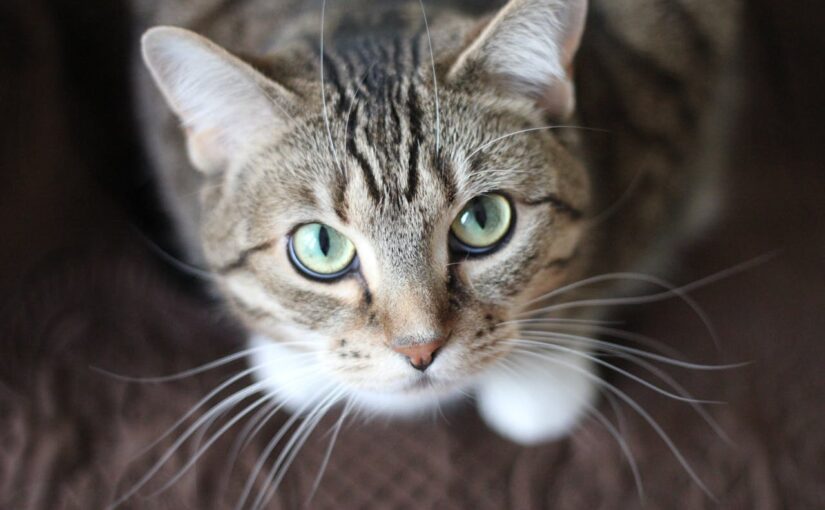
Curled up on sofas across the English-speaking world, millions of cats purr contentedly in homes where they are cherished family members. Yet in laboratories across the United States, Europe, and beyond, thousands of cats live dramatically different lives. These animals endure invasive procedures, painful experiments, and often premature death, all in the name of scientific research that increasingly appears both ethically indefensible and scientifically questionable.
In 2023 alone, more than 13,000 cats were used in experiments across the United States, with disturbingly, 51% more cats subjected to painful procedures without pain relief compared to the previous year. In Germany, 538 cats endured laboratory experiments in 2022. These numbers, while significant, represent only reported cases from countries with tracking systems. The true global figure remains unknown, hidden behind laboratory doors and incomplete regulatory frameworks.
What Happens to Cats in Research Facilities
The experiments conducted on cats range from pharmaceutical testing to invasive neurological research. Cats are used predominantly for veterinary drug development, pet food testing, and regulatory toxicity studies. However, some of the most disturbing research involves basic neuroscience experiments, particularly in hearing and vision studies, where the relevance to human health remains deeply questionable.
Consider the case documented by PETA in 2012 involving a cat named Double Trouble at the University of Wisconsin-Madison. This cat underwent multiple surgeries where researchers implanted steel rings into her eyes and screwed a metal bolt into her skull. Later, experimenters drilled holes into her head and inserted electrodes into her brain. During one procedure, the anesthesia wore off prematurely, meaning Double Trouble was conscious while researchers cut and drilled into her skull. For experiments, her head was clamped immobile while her body was stuffed into a nylon sack. She was deliberately starved before testing sessions to force cooperation through food rewards. After months of suffering, including facial paralysis, seizures, and antibiotic-resistant infections, Double Trouble was killed so researchers could examine her brain.
While these particular experiments at UW-Madison ended in 2015 following sustained advocacy campaigns, similar research continues elsewhere. In hearing studies, healthy kittens are deliberately deafened by administering toxic doses of antibiotics that destroy the delicate hair cells in their inner ears. Researchers then drill into the kittens’ skulls, implant electrodes into their brains, and suture devices onto their shoulder blades. These animals live for months with experimental apparatus attached to their bodies before being killed for brain tissue examination.
The Scientific Problem: Why Cat Testing Fails
Beyond the ethical horror, a fundamental scientific problem undermines animal experimentation. Cats metabolize substances differently than humans, making them unreliable models for predicting human responses to drugs. Common pain relievers like aspirin and paracetamol (acetaminophen) are toxic to cats, while morphine produces opposite effects in cats compared to humans (stimulation rather than sedation). An analysis of 2,366 drugs found that animal testing results are “highly inconsistent predictors of toxic responses in humans, and are little better than what would result merely by tossing a coin”.
These physiological differences mean that testing human medications on cats is not just cruel but scientifically questionable. The poor predictive value extends across species. Studies have shown that animal models, including cats, often fail to replicate in human clinical trials despite showing promising results in laboratory settings. The stress of laboratory conditions itself corrupts data, as elevated cortisone and blood pressure levels in stressed animals limit the applicability of results to humans.
The Alternative Path Forward
The persistence of cat testing becomes even more difficult to justify given the existence of superior alternatives. Modern science has developed human-relevant methods that provide more accurate predictions of drug effects and toxicity. Organ-on-chip technology represents a revolutionary advance, using microfluidic devices lined with human cells to mimic the structure and function of human organs. These “organs-on-chips” can be linked together to create a “body-on-chips” that reveals how drugs impact multiple organ systems simultaneously, replicating human responses far more accurately than any animal model.
Computer modeling (in silico methods) now enables sophisticated simulations of human biology and drug interactions based on existing knowledge and molecular structure analysis. Human cell and tissue cultures, 3D tissue models, and stem cell research all offer pathways to understanding disease and testing treatments without animal suffering. Researchers at Washington State University recently developed a cell culture test specifically designed to identify drugs potentially harmful to cats, demonstrating that modern methods can protect animals rather than exploit them.
The scientific community increasingly recognizes these alternatives as not merely humane substitutes but as superior methods. Organoid technology and organ-on-chip systems better recapitulate human physiology and disease processes than animal models ever could. Population studies comparing healthy and ill people, combined with advanced cellular and computational techniques, provide insights that are both ethically sound and scientifically robust.
The Ethical Imperative
For cat lovers, the cognitive dissonance is stark. The same species we welcome into our homes, whose companionship enriches our lives, suffers behind laboratory walls. Cats experience pain, fear, and distress just as our companion animals do. The laboratory cage offers no comfort, no loving touch, no freedom to explore or play. Instead, these cats endure isolation, invasive procedures, and experimental manipulations that deliberately cause harm.
The European Coalition to End Animal Experiments argues that reliance on animal experimentation faces both strong ethical objections and scientific deficiencies. The practice reflects what philosophers call speciesism, a discriminatory worldview that assigns value to beings based solely on species membership rather than capacity for suffering. Just as we have rejected other forms of discrimination, the ethical evolution of our society demands we extend moral consideration to all sentient beings.
Regulatory frameworks lag behind both scientific progress and public sentiment. The Animal Welfare Act in the United States excludes 95% of animals used in testing (primarily rats and mice) from protection, though it does cover cats. However, even for covered species, regulations focus on housing standards rather than questioning whether experiments should occur at all. Last year, Congress eliminated the requirement that new drugs be tested on animals before human trials, acknowledging that alternative methods exist, though companies may still choose animal testing.
Moving Toward a Humane Future
The path forward requires coordinated action across multiple fronts. Legislative reforms must mandate reporting of all animal use in research, provide financial incentives for non-animal methods, and require justification for any continued animal testing. Research funding should prioritize development and validation of human-relevant alternatives. The Research Modernisation Deal and similar initiatives demonstrate scientifically sound roadmaps for transitioning away from animal experimentation while advancing medical knowledge.
Consumer awareness and advocacy remain powerful forces. Public pressure ended the archaic hearing experiments on cats at the University of Wisconsin-Madison. Sustained campaigns by organizations working to end animal testing have achieved incremental progress, with animal use in British laboratories falling to its lowest level since 2001. Yet these victories remain incomplete while any sentient being suffers for dubious scientific gain.
For those who love cats, whether the tabby sleeping on your couch or the nameless cats in laboratory cages, the message is clear. These animals deserve protection, not exploitation. The scientific justifications grow weaker as alternatives improve. The ethical arguments have never been weaker. In an era of remarkable technological capability, our continued reliance on animal experimentation reflects not scientific necessity but institutional inertia and insufficient moral imagination.
The cats in laboratories cannot advocate for themselves. They depend on us to recognize their suffering, question the systems that perpetuate it, and demand the humane, human-relevant science that benefits both medical progress and animal welfare. Every cat, whether companion or research subject, possesses the same capacity for suffering and the same fundamental right to a life free from deliberate harm. The science now supports what our hearts have always known: there are better ways forward, if we have the courage to pursue them.
For readers who want to learn more about animal testing on cats or take action to support alternatives, here are three official organizations actively working to end these practices:
1. PETA (People for the Ethical Treatment of Animals) – Cats in Laboratories
https://www.peta.org/issues/animals-used-for-experimentation/cats-laboratories/
PETA conducts undercover investigations in research facilities, documents abuse, and campaigns to shut down laboratories using cats. Their website provides detailed information about specific cases, including the Double Trouble case at the University of Wisconsin-Madison, and offers action opportunities to support their Research Modernization Deal, a comprehensive plan to phase out animal testing.
2. Cruelty Free International
https://www.crueltyfreeinternational.org
This British animal rights organization campaigns globally for the abolition of all animal testing and serves as the secretariat for the European Coalition to End Animal Experiments. They conduct laboratory investigations, promote non-animal tested products through their “Leaping Bunny” certification program, and work with government regulators to develop and validate alternative testing methods.
3. Humane Society International – Alternatives in Product Testing
https://www.humaneworld.org/en/news/alternatives-product-testing
HSI works directly with government regulators in the EU, United States, and international bodies to reduce reliance on animal testing and promote sophisticated non-animal test methods. Their website details more than two dozen scientifically validated alternative methods, including organ-on-chip technology, cell culture tests, and computer modeling that replace animal experiments while providing more accurate human-relevant results.
Image: Krysten Merriman