Ancient Egyptians may have found cat worship less a choice than a surrender to what cats seemed to embody. A cat settles into a room with the composure of a creature that answers to no one, moving with a grace so precise it borders on the supernatural. Chaos swirls unnoticed around it. Its gaze fixes on corners empty to human eyes, as though it tracks secrets hidden just beyond the visible world. In a civilization consumed by the mysteries of life and death, cats could easily have appeared to possess knowledge humanity spent centuries trying to uncover.
But the sacred status of cats in ancient Egypt went far beyond admiration for their elegant behavior. Cats were practical heroes in a land defined by agriculture. They patrolled the grain stores that fed entire communities, killing the rats and snakes that threatened both the food supply and human life. In this way, the cat earned its place in Egyptian hearts not just as a beautiful creature, but as a guardian. And in Egypt, guardians had a way of becoming gods.
Over thousands of years, feline energy wove itself deeply into Egyptian religion, appearing in the forms of goddesses who governed everything from warfare to healing, from justice to music. These were not minor spirits lurking at the edges of mythology. These were some of the most powerful and beloved figures in the entire Egyptian divine family. Getting to know them means getting to know Egypt itself.
Bastet: The Cat Goddess Who Captured Every Heart
Of all the feline deities in the Egyptian tradition, Bastet is probably the most familiar name. She is often pictured as a sleek, seated cat or as a woman with the head of a domestic cat, holding a sistrum (a kind of musical rattle used in religious ceremonies) and looking out at the world with calm, knowing eyes.
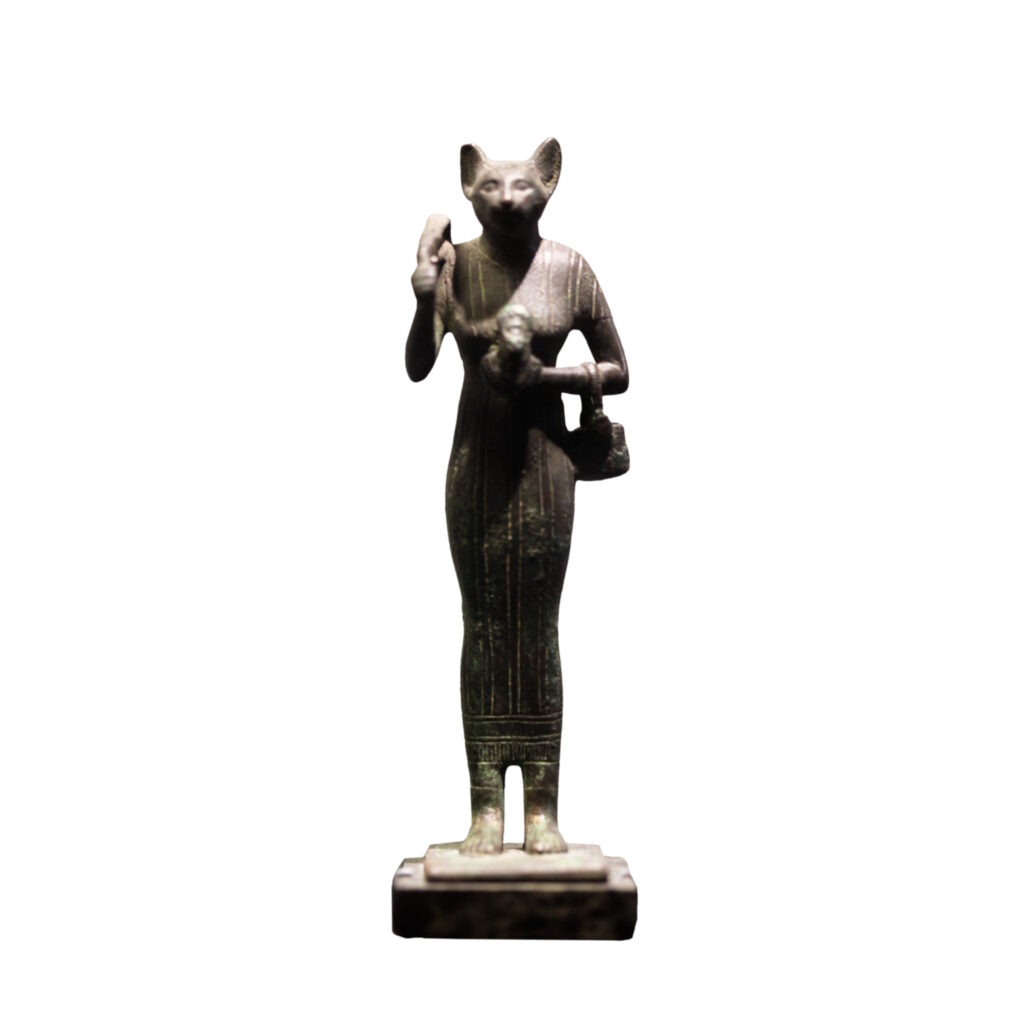
Her origins, however, were far more fierce. In the earliest versions of her mythology, Bastet appeared as a lioness, a warrior goddess protecting the pharaoh and the sun god Ra. She was considered one of the “Eyes of Ra,” a title given to powerful female deities who acted as extensions of Ra’s divine will, his enforcers in a cosmos that constantly threatened to fall into chaos. Over centuries, as Egypt’s relationship with domestic cats deepened, Bastet’s lioness nature softened into something warmer. She became the goddess of home, fertility, music, dance, and the pleasures of everyday life. She remained protective, but her protection now extended to ordinary households, pregnant women, and children.
Her main center of worship was the city of Bubastis, located in the Nile Delta. The Greek historian Herodotus, who visited Egypt around 450 BCE, described the annual festival held there in her honor as one of the most joyful and well-attended gatherings in all of Egypt. Thousands of pilgrims traveled by boat along the Nile, singing, playing instruments, and celebrating with enormous enthusiasm. Herodotus suggested that more wine was consumed during this festival than at any other time of the year in Egypt, which tells you a great deal about the spirit of the occasion.
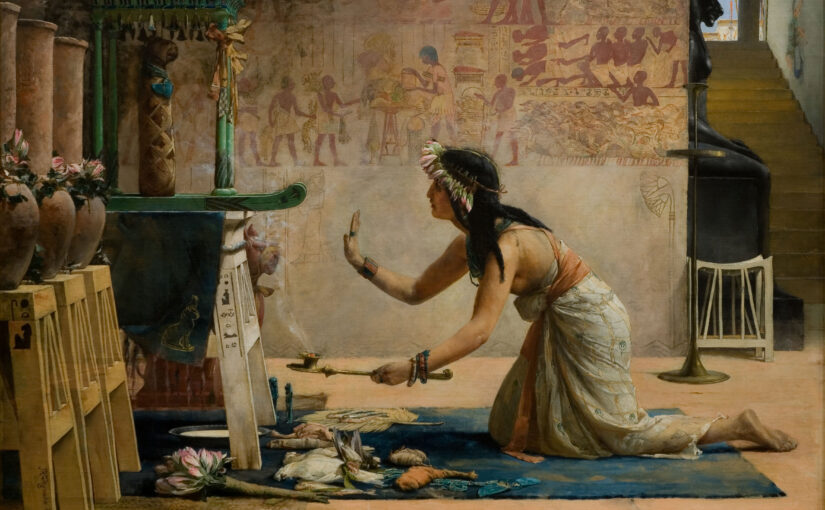
Cats associated with Bastet’s temples were treated with extraordinary care. They were fed, adorned, and considered sacred in the truest sense. When a household cat died, the family would go into a period of mourning, and one of the rituals involved shaving their eyebrows as a sign of grief. The cat might then be mummified and taken to Bubastis for burial, a practice that resulted in enormous cat cemeteries still being studied by archaeologists today.
Sekhmet: The Lioness Who Drank the Nile Red
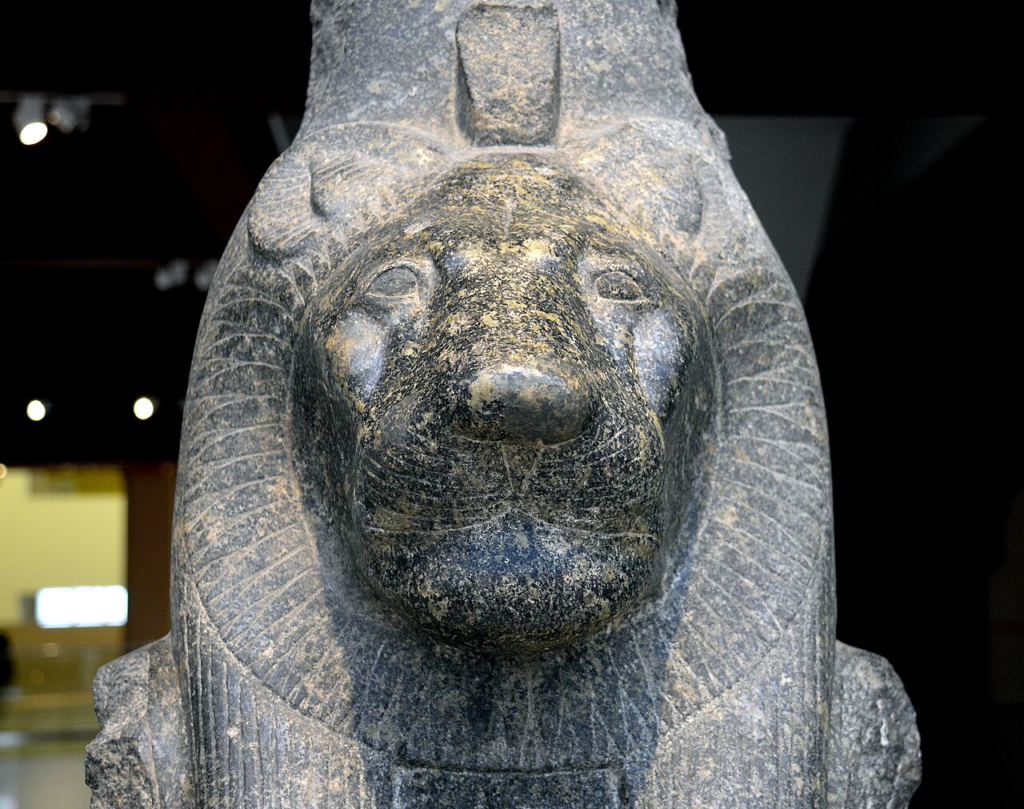
If Bastet represented the nurturing, joyful side of feline divinity, Sekhmet was something altogether more terrifying. Her name translates roughly to “The Powerful One,” and she earned that title many times over. A lioness-headed goddess of war, plague, and destruction, Sekhmet was the embodiment of Ra’s fury, sent into the world to punish those who defied divine order.
The most dramatic myth involving Sekhmet tells the story of what happens when divine wrath goes too far. According to the ancient tale, Ra grew angry with humanity for its disobedience and sent Sekhmet down to Earth to punish them. She did her job with terrifying efficiency, slaughtering people across the land and drinking their blood. The problem was that she could not stop. Sekhmet entered a kind of bloodlust that threatened to wipe out the entire human race.
Desperate, the gods devised a plan. They flooded the fields with thousands of jars of beer, dyed red to resemble blood. Sekhmet, not knowing the difference, drank it all and fell into a deep, drunken sleep. When she woke, her murderous fury had faded. Humanity was saved, and Sekhmet’s terrifying nature had, at least temporarily, been subdued.
This myth is remarkable not just for its drama, but for what it reveals about how Egyptians understood the nature of power. Even the most fearsome forces could be managed, redirected, and ultimately made to serve life rather than destroy it. Sekhmet herself reflected this duality. The same goddess who brought plague was also closely associated with healing. Her priests doubled as physicians, and she was invoked for protection against disease just as readily as she was feared as its cause. In Egyptian thinking, destruction and healing were never entirely separate things, and Sekhmet embodied that truth completely.
Mafdet: The Oldest Cat Deity You Have Never Heard Of
Long before Bastet became a household name, there was Mafdet, and her story deserves far more attention than she usually receives. Mafdet is one of the oldest deities in the entire Egyptian tradition, appearing in written records as early as the First Dynasty, which places her origins somewhere around 3,100 BCE. She predates the great pyramid-builders and belongs to an era when Egypt was still finding its feet as a unified kingdom.
Mafdet was a goddess of justice, execution, and protection against venomous creatures. She was depicted in various forms, often as a cheetah or a woman with a feline head, sometimes shown sprinting up a staff or pole as if in pursuit of prey. Her particular role was to protect against snakes and scorpions, which were very real and ever-present dangers in ancient Egypt, and to serve as a kind of divine executioner, the sharp instrument of Ra’s justice against his enemies.
In the Pyramid Texts, some of the oldest religious writings in the world, Mafdet’s claws are described as tearing apart the enemies of the dead pharaoh, ensuring safe passage into the afterlife. She was not soft or decorative. Mafdet was the cutting edge of divine law, and the Egyptians called on her when they needed protection of the most serious kind.
Why Cats Became Sacred: The Practical Roots of a Divine Relationship
It would be easy to romanticize the Egyptian reverence for cats as purely spiritual, but there was a deeply practical dimension to the story as well. Egypt’s agricultural economy depended on grain, and grain attracted rodents. Cats, drawn by the presence of prey, naturally began living near human settlements and eventually inside them. The Egyptians recognized almost immediately what an extraordinary gift this was.
Beyond protecting grain, cats also killed venomous snakes and scorpions, a service that saved countless lives. The African wildcat, the ancestor of the domestic cats we know today, was likely the primary species that entered this early relationship with Egyptian farmers. Over generations, these cats became tamer, more comfortable with human company, and eventually fully domesticated, winding their way from the fields into the home and then into the temple.
The leap from “useful animal” to “sacred creature” was not as strange as it might sound. In ancient Egypt, animals that exhibited extraordinary qualities, whether powerful, mysterious, or simply indispensable to human survival, were understood as manifestations of divine energy. The cat’s combination of grace, ferocity, practical value, and uncanny stillness made it a natural symbol of the divine feminine forces that protected and sustained the world.
Felines in Art, Jewelry, and Daily Life
The influence of feline deities was not confined to temples and priestly rituals. It spilled out into everyday Egyptian life in ways both grand and intimate. Cat-shaped amulets were among the most popular protective charms in ancient Egypt, worn by people of all social classes to invoke Bastet’s protection. Bronze figurines of seated cats were placed in homes as household guardians, and many of these objects have survived into the modern era, their smooth faces still carrying that same expression of serene self-assurance.
In Egyptian art, cats appear on painted walls, carved reliefs, jewelry, and everyday objects. One of the most striking images in Egyptian religious art shows Ra himself in the form of a great cat, slicing off the head of Apophis (the serpent of chaos, a symbol of disorder and darkness) beneath the sacred persea tree. This image, which appears in various papyri (ancient texts written on a paper made from a reed-like plant), captures perfectly how central feline imagery was to Egyptian ideas about cosmic order and the defeat of darkness.
Sekhmet inspired one of the most ambitious artistic projects in the ancient world. The pharaoh Amenhotep III, who ruled around 1,390 to 1,352 BCE, commissioned over seven hundred statues of Sekhmet, placing them throughout his mortuary temple and other sacred sites. The sheer scale of this undertaking suggests not just devotion, but a desire to surround himself entirely with her power, hoping that so many stone embodiments of the goddess would protect him and ensure his eternal survival.
Did You Know?
Here are a few surprising facts to keep in mind the next time you find yourself gazing into a cat’s inscrutable eyes.
Exporting cats from Egypt was actually illegal for a significant period of history. The Egyptians considered cats so sacred and so important to their society that they prohibited their sale or removal to other countries. Phoenician traders are said to have smuggled cats out of Egypt to sell them throughout the Mediterranean, which is one of the reasons domestic cats spread so widely across the ancient world.
The city of Bubastis once housed one of the largest known cat cemeteries in the ancient world. When archaeologists excavated the site in the nineteenth century, they discovered hundreds of thousands of mummified cats. Unfortunately, a significant number of these mummies were shipped abroad and ground up for use as agricultural fertilizer before their full historical value was recognized, a fact that still makes archaeologists wince today.
During the Battle of Pelusium in 525 BCE, the Persian king Cambyses II reportedly used the Egyptians’ reverence for cats against them in battle. According to ancient accounts, Persian soldiers carried cats or painted images of cats on their shields, knowing that the Egyptian defenders would hesitate to attack for fear of harming the sacred animals. Whether or not every detail of this story is accurate, it captures beautifully just how seriously the Egyptians took their feline companions.
A Legacy That Never Really Ended
The ancient Egyptian civilization may have faded thousands of years ago, but its cat gods have never really gone away. Bastet, Sekhmet, and Mafdet live on in museums, in tattoos, in novels and films, in the names of boats and cats and children. The internet, with its boundless and slightly unhinged love for cat videos and cat memes, has been described more than once as something the ancient Egyptians would have understood completely and wholeheartedly approved of.
That continuity carries a quiet comfort. Five thousand years have swept past in waves of collapsing empires, shifting languages, and technologies that reshaped daily life, yet cats still command the same blend of amusement and reverence they inspired in the ancient world. People pause to watch them even now, drawn in by the calm intelligence behind their gaze and the faint sense that something ancient lingers there—something just removed from ordinary human experience, impossible to ignore even in the middle of an unremarkable day.
The Egyptians simply had the wisdom to name that feeling, give it a face, build it a temple, and worship it accordingly. Perhaps that is not so different from what we do every time we stop scrolling to look at a cat photo, finding a small moment of peace in the middle of everything.
The gods, after all, are still with us. They are just sitting on our keyboards now.
Header image: The Obsequies of an Egyptian Cat by John Reinhard Weguelin.